
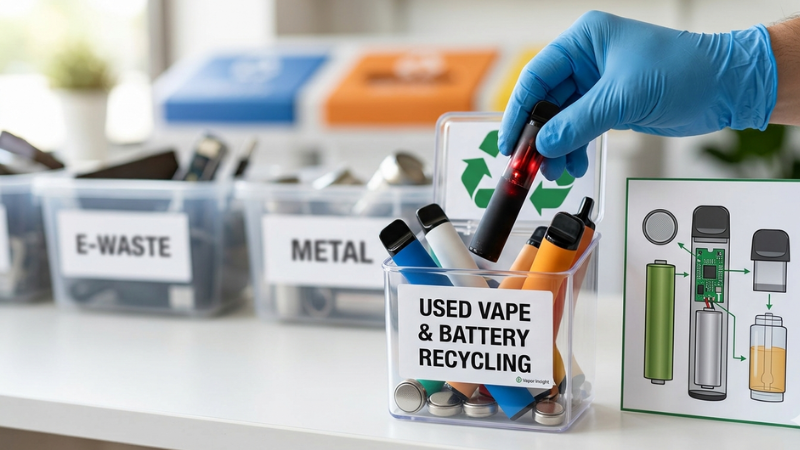
While the major advantage of disposable vapes has always been convenience, an ignored concern that must come to every enthusiast’s mind is how to dispose of disposable vapes correctly.
Millions of disposable vapes are discarded in the wrong way every year, which poses a threat to the environment and causes vast losses of lithium, a highly valuable and limited material.
Also, because these devices contain batteries, plastics, metals, and certain electronic components, they require more careful handling than ordinary household waste.
So let’s understand how to properly dispose of disposable vapes for both environmental protection and public safety.
We’ll also show you the best way to recycle them in order to minimize the impact on our limited resources.
Why Disposable Vapes Should Not Be Thrown in the Trash
While disposable vapes are easy to pick up and use, it’s not as easy to just throw them away after you are done. This is because disposable vapes contain many components that make them unsuitable for standard waste disposal.
Throwing these vapes in the garbage also poses a fire hazard, since these batteries can explode and/or cause a fire when compressed. They can also release harmful chemicals to local landfills, eventually posing dangers to our environment.
Apart from batteries, disposable vapes contain plastic, metal, circuit boards, and traces of e-liquid that may require specialized handling.
When these materials are sent to landfills, valuable resources that could potentially be recovered through recycling are lost.
As disposable vape use continues to increase, responsible disposal practices become increasingly important for reducing environmental impact and supporting more sustainable waste management efforts.
What is Inside a Disposable Vape?
Lithium-Ion Battery
Most disposable vapes are equipped with a rechargeable or non-rechargeable lithium-ion battery that powers the device. Although compact, these batteries store huge amounts of energy and need proper disposal to minimize environmental and safety concerns.
Plastic Components
The outer shell of a disposable vape is usually made from plastic materials that safeguard the internal components. Depending on local recycling capabilities, some of these plastics may be recyclable while others may require special processing.
Metal Parts
Disposable vape devices contain tiny metal components used in the battery, internal structure, and heating system. Metals are valuable materials that can often be recovered through recycling programs instead of being thrown away as waste.
Electronic Circuitry
Inside all disposable vapes is a small circuit board responsible for controlling power delivery and device operation. These electrical components are considered e-waste and may contain materials that require specialized recycling procedures.
E-Liquid Residue
Even after a vape appears empty, tiny amounts of e-liquid residue may remain inside the device. This leftover liquid is one reason why disposable vapes should be handled through proper disposal or recycling channels rather than regular household trash.
Can Disposable Vapes Be Recycled?
Yes, disposable vapes can be recycled, but not in your regular curbside recycling bin. Because they contain lithium-ion batteries and hazardous nicotine residue, they must be processed at specialized e-waste or hazardous waste facilities to prevent toxic leaching and dangerous battery fires.
The availability of disposable vape recycling options varies depending on local regulations and recycling infrastructure. Some communities provide battery recycling programs, e-waste collection events, or dangerous waste facilities that accept vape devices.
While not every component may be recoverable in every area, responsible recycling helps reduce disposable vape waste and supports the recovery of valuable materials that would otherwise end up in landfills.
How to Properly Dispose of Disposable Vapes
Proper disposable vape disposal is a lot more than just throwing a used device into a trash bin. These products contain batteries and electronic components, which is why they should be handled carefully to minimize environmental impact and potential risks.
Step 1: Ensure the Device Is No Longer Usable
Before getting rid of a disposable vape, make sure that it has reached the end of its life. Most devices stop producing vapor once the battery is depleted or the e-liquid is exhausted. If the device is still working, keep using it until it is no longer usable.
Step 2: Store Used Vapes Safely
After you are done with a disposable vape, store it in a cool, dry place away from direct sunlight, heat, and flammable materials. Doing so will reduce the risk of battery damage while you arrange for recycling or disposal.
Step 3: Separate Components If Allowed
Some recycling programs may allow batteries and electronic components to be processed separately. So, if local guidelines permit disassembly, you can do it safely and improve recycling efficiency.
Step 4: Locate an Approved Recycling Facility
Look for local e-waste recycling centers, battery recycling programs, hazardous waste facilities, or retailer take-back programs that accept electronic devices. Many communities offer resources to help residents identify approved disposal locations.
You can also set up secure collection bins and work with a waste management expert to find a tailored solution for your needs.
Step 5: Recycle the Device Responsibly
Once a suitable recycling option has been found, follow its instructions for collection or drop-off. Responsible recycling helps recover valuable materials while reducing the amount of e-waste in landfills.
Where to Recycle Disposable Vapes
Finding an appropriate recycling location is one of the most crucial parts of responsible vape battery disposal. As disposable vapes consist of batteries and electronic components, they are often accepted through specialized recycling programs instead of standard household recycling systems.
Local Vape Shops
Some vape retailers participate in collection or take-back initiatives crafted to help customers dispose of used devices responsibly.
While participation differs by location, contacting local vape shops can be a useful first step when searching for recycling options, as they may be able to guide you to the closest municipal drop-off point.
Battery Recycling Programs
As lithium-ion batteries require specialized handling, battery recycling programs may accept disposable vape batteries or complete devices. These programs make sure that batteries are processed safely and kept out of traditional waste streams.
Electronic Waste (E-Waste) Recycling Centers
A lot of electronic waste recycling facilities accept products containing batteries, circuit boards, and other electronic components.
As disposable vapes have them all, e-waste centers are usually among the most ideal recycling destinations. Also, all local governments provide a list of recognized vendors and drop-off sites.
Household Hazardous Waste Facilities
Some local governments operate household hazardous waste collection sites that accept batteries and small electronic devices. These facilities may offer another option for individuals wanting to recycle disposable vapes safely.
Manufacturer Recycling Programs
Some manufacturers and retailers have introduced recycling initiatives aimed at reducing disposable vape waste. These programs may provide mail-back options, collection points, or other recycling services designed specifically for vaping products.
So you can check the brand’s official website or the box to see if they offer a prepaid shipping label.
Tips for Reducing Disposable Vape Waste
Reducing waste is just as important as recycling. While proper disposal helps in limiting environmental impact, taking steps such as below can further support sustainability efforts.
Use Recycling Programs Whenever Possible
Whenever recycling options are available, make sure to take full advantage of them. Proper vape recycling helps recover valuable materials and minimizes the volume of electronic waste sent to landfills.
Follow Manufacturer Disposal Instructions
Several manufacturers offer guidance regarding disposal and recycling. Reviewing these recommendations can help ensure devices are handled in alignment with best practices and local regulations.
Dispose of Devices Promptly
Avoid storing huge quantities of used disposable vapes for extended periods. Timely disposal reduces clutter and prevents potential issues associated with aging or damaged batteries.
Consider More Sustainable Vaping Options
For users worried about environmental effects, reusable vape systems may generate less waste over time than single-use products. Refillable devices often allow batteries and components to remain in service longer, reducing overall material consumption.
Switch to a Reusable Device
Transition to a refillable pod system or mod. It generates less long-term plastic waste and drastically reduces your cost-per-puff over time.
Leverage Retail Take-Back Schemes
Do not throw away vapes in your regular household rubbish or recycling bins. Damaged lithium batteries can easily cause fires in waste trucks and recycling facilities. Instead, return them to local vape shops or authorized e-waste drop-off bins.
Participate in Mail-in Programs
If local retail drop-offs are not available, utilize specialized battery and e-waste mail-in recycling kits to ensure safe component processing.
Frequently Asked Questions
Can I throw a disposable vape in the trash?
No, you should never throw a disposable vape in the trash, as it contains e-waste such as lithium-ion batteries and toxic nicotine residue that can pose serious fire and environmental hazards.
Are disposable vape batteries hazardous?
Yes, disposable vape batteries can become hazardous if damaged, punctured, crushed, or exposed to excessive heat as they contain sealed lithium-ion cells, toxic residual nicotine, and heavy metals.
This is the reason they should always be handled through recognized battery recycling or electronic waste recycling programs.
What happens if disposable vapes are not recycled?
When disposable vapes are not recycled, the valuable materials they contain, such as metals, plastics, and batteries, may end up in landfills and eventually become hazardous.
These materials also leach toxic heavy metals and microplastics into the environment, which also contributes to the growing problem of electronic waste.
Do vape shops accept used disposable vapes?
Yes, some vape shops accept used disposable vapes, but only as free drop-off recycling for electronic waste, not for trade-in cash or store credit.
Are disposable vapes bad for the environment?
Yes, disposable vapes can contribute to environmental concerns because they contain batteries, plastics, metals, and electronic components in a single-use format, with millions discarded daily.
Responsible recycling and disposal practices help reduce their impact and support more sustainable waste management efforts.
Final Thoughts
Disposable vapes offer great convenience and simplicity, but they also bring with them tedious disposal challenges due to the batteries and electronic components they have.
Unlike regular household waste, these devices should be treated as e-waste and handled through proper recycling or disposal channels whenever possible.
Learning how to properly do so is a crucial step toward reducing environmental impact and promoting responsible waste management.
Through recognized recycling facilities, battery collection programs, and e-waste recycling services, users can prevent valuable materials from ending up in landfills.
As disposable vape use continues to rise, responsible disposal practices will play an exceedingly important role in reducing disposable vape waste and supporting long-term sustainability efforts.
Taking a few moments to recycle a used device properly can make a significant difference for both the environment and public safety.
If your local vape shops or manufacturers don’t run recycling programs, you can try checking for waste facilities in your neighborhood. In the US, your best bet is Household Hazardous Waste (HHW) facilities.