
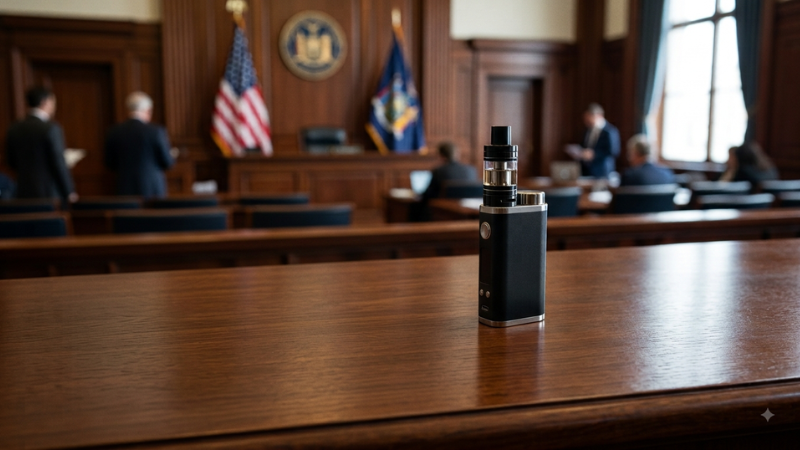
In her New York State budget proposal for fiscal year 2017, Governor Kathy Hochul announced many elements aimed at restricting access to nicotine pouches and vaping products and making them more costly. The 2017 fiscal year starts April 1, 2026.
Some of the governor’s proposals are:
- Making “alternative nicotine products” (including nicotine pouches) subject to the state’s 75% wholesale tax on non-cigarette tobacco products like loose tobacco and cigars. The tax would take effect September 1.
- Adding a 2nd tax on vaping products, 55 cents/item made in or imported into New York, whether it contains nicotine or not. The proposed tax would be levied on distributors. Also, the state would continue to charge retail customers the existing 20% retail tax.
- Create a state registry of vaping products that can legally be sold in the state. Manufacturers would pay $1500/product every year to apply for inclusion, and must certify the submitted products have been approved by the FDA or have been approved by the FDA or have timely filed premarket tobacco applications still under review.
- Creating an extensive system of penalties for possession or sale of “contraband vapor products,” including substantial prison sentences for high-volume and repeat offenders. The proposed budget includes $4.7 million to pay for disposal and storage of seized contraband vapes.
New York banned online sales and flavored vapes in 2020. Despite the flavor ban, Hochul accepts that 99% of vapor products offered in New York are flavored and violate state law.
Yet, despite unsuccessfully trying to micromanage the big vape market, the governor continues to think that putting extra restrictions and bigger penalties will create a difference.
Registry laws, like the one Hochul is proposing, usually originate with tobacco industry lobbyists.
As they reward brands with enough income to spend millions on PMTAs and wait for authorization, tobacco companies like Altria Group and R.J. Reynolds have used registry laws as a strategy to end competition by the small, independent industry.
Hochul hasn’t proposed an increase on cigarette tax rates, which are already the highest in the country at about $5.35/pack.
If Hochul’s ideas for a registry and increased enforcement are successful, the market for flavored vapes could move totally completely underground, eliminating any tax benefit to the state.
History shows that when flavored vape products are banned, some consumers turn to the black market while some revert to smoking lethal cigarettes.
The governor’s budget proposal will now go through a 30-day period of being amended and supplemented. It will then be debated in the State Legislature, and both the State Senate and State Assembly will produce their own budget proposals.
The final budget must be approved by both houses of the legislature and the governor by March 31.