
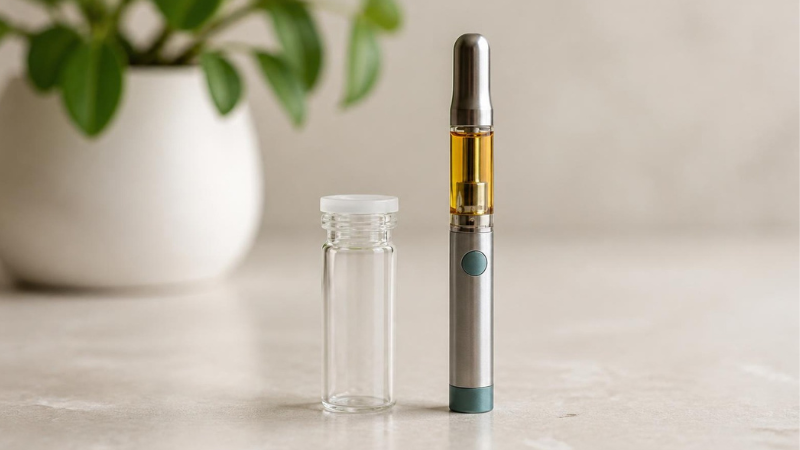
If you’re wondering do THC carts expire, the answer is yes, but expiration is better understood as slow degradation instead of an instant change from usable to unusable.
With time, THC oil can lose its potency and its terpenes can break down, affecting flavor, color, aroma, and overall quality.
The THC cart shelf life depends on factors such as packaging, formulation, cartridge hardware, manufacturing date, and especially how the product has been stored. Light, heat, oxygen, and repeated temperature changes can speed up deterioration.
An old cartridge isn’t by itself unsafe just because it has passed a printed date, but a considerable amount of changes in smell, appearance, consistency, taste, or hardware condition deserve attention.
Here in this guide, we’ll explain THC cart expiration, how long cartridges usually last, what happens as they age, how to store them appropriately, and how to recognize when an older cart should no longer be used.
Do THC Carts Expire?
Yes, THC carts can degrade or expire over time, although expiration isn’t necessarily a sudden event.
As a cartridge ages, THC and other cannabinoids can slowly change, while terpenes and other volatile compounds may break down. These changes can affect flavor, potency, aroma, and overall quality.
The THC cart expiration timeline depends on factors such as the packaging, oil formulation, cartridge hardware, manufacturing date, and storage conditions. Light, heat, oxygen, and repeated exposure to unfavorable temperatures can boost degradation.
A printed expiration or best-by date is therefore handy, but it isn’t the only factor to consider. An older cart that has been sealed properly may show fewer changes than one exposed to sunlight or heat.
Because of that, evaluating an older THC vape cartridge should involve both its current condition and labeled date. Significant changes in consistency, appearance, taste, smell, or hardware can signal that the cart has deteriorated.
How Long Do THC Carts Last?
The THC vape cartridge shelf life can differ depending on the packaging, formulation, cartridge hardware, manufacturing date, and storage conditions.
Properly sealed and stored cartridges usually retain their quality longer than carts exposed repeatedly to light, heat, oxygen, or temperature fluctuations.
There isn’t one universal expiration time period that applies to every THC vape cartridge. Makers may provide a best-by or expiration date based on product-specific stability information, making the label the most important starting point when determining age.
It’s also crucial to distinguish shelf life from usage life. A cartridge may remain stable chemically while sealed but become depleted much sooner after opening and continuous use. Once opened, heat, exposure to air, and handling can lead to gradual changes in the oil.
For an older cartridge, check its date, packaging, storage history, current appearance, and physical condition, and aroma instead of relying on age alone.
What Happens to a THC Cart as It Gets Older?
As a THC cart ages, the oil can slowly change due to exposure to light, oxygen, time, and heat. These factors can affect terpenes, cannabinoids, aroma, flavor, and physical characteristics. The rate of change depends heavily on the storage conditions and formulation.
Changes in THC and Other Cannabinoids
THC can gradually degrade with time, possibly reducing the cartridge’s potency. Some degradation products may form as cannabinoids undergo chemical changes, but the process isn’t instant and shouldn’t be assumed to follow the same process for all cartridges.
Changes in Terpenes and Flavor
Terpenes are typically more volatile than cannabinoids and can evaporate or change during prolonged storage, mainly when exposed to air or heat. As a result, an older cart may develop an altered flavor, weaker aroma, or a less pronounced terpene profile.
Changes in Oil Appearance and Consistency
Older cannabis oil can occasionally become thicker, darker, or different in consistency and appearance.
However, viscosity or color alone isn’t a reliable method to determine whether a THC cart has expired or become unfit. Storage conditions, oxidation, and formulation can all influence how the oil appears.
Because of this, evaluating an aging cart requires looking at the whole picture, including its storage history, date, formulation, packaging, and physical condition, rather than treating one visual change as solid proof of degradation.
Signs a THC Cart May Be Too Old or Degraded
Determining whether a THC cart has become too old or degraded needs more than just checking its age. An older cartridge may still look fine, while another can show considerable changes after poor storage. So look for many signs together instead of treating one change as definitive.
Significant Changes in Color
Cannabis oil can naturally differ in color, and some darkening can happen with oxidation or age. However, an unexpected or substantial color change, mainly when combined with other strange characteristics, may signal that the oil has gone bad.
Changes in Texture or Consistency
Older oil may become significantly separated, thicker, or otherwise different from its authentic consistency. Some variation is formulation-dependent, so texture alone doesn’t prove expiration.
Significant changes along with poor storage or other warning signs deserve greater care.
Unusual Smell or Taste
A harsh, stale, chemical-like, or significantly different taste or aroma can indicate that the formulation has changed. If a cart develops an abnormal or unpleasant sensory profile, continuing to use it isn’t ideal.
Leaking, Cracks, or Damaged Hardware
Physical damage is a different concern from normal chemical aging. Leaking oil, damaged connectors, cracked glass, loose components, or compromised seals can affect the cartridge’s integrity.
A physically damaged cart shouldn’t be used just because its oil still looks fine.
Missing or Unclear Product Information
An old cart with missing labeling, unclear manufacturer information, an unreadable batch number, or no reliable date is harder to evaluate.
Product traceability matters as you cannot confidently assess its origin, age, or applicable quality data without basic product details.
Can You Use an Expired THC Cart?
Whether an older THC cart should be used depends on more than the date mentioned on its packaging.
An expiration or best-by date signals when the maker expects the product to remain within its intended quality specifications, but cannabis oil can also change gradually after or before that date.
A cart that has passed its labeled date may have experienced THC degradation, flavor changes, terpene loss, oxidation, or changes in consistency.
More importantly, physical problems such as cracked hardware, leaking, damaged seals, or contamination are reasons not to use the cartridge regardless of its age.
If an older cartridge has unclear labeling or an unknown storage history, its condition is harder to assess properly. For regulated products, following the brand’s expiration guidance and checking available product information is the most suitable approach.
In short, don’t treat the expiration date as the only test. Consider the storage history, date, oil condition, product information, and cartridge hardware together when determining whether an older THC cart should be thrown away.
How to Store THC Carts Properly
Proper THC cart storage can slow degradation and protect the oil/s flavor, potency, consistency, and aroma.
Light, heat, oxygen, and repeated temperature changes can all lead to changes over time, so storage conditions matter almost as much as the cartridge’s age.
Keep THC Carts Away From Excessive Heat
Store THC carts somewhere stable and cool, away from direct heat sources such as hot vehicles, radiators, or prolonged exposure to high temperatures.
Excessive heat can speed up terpene and cannabinoid degradation and may also affect oil viscosity or the oil cartridge.
Protect Carts From Light
Prolonged exposure to strong light or direct sunlight can contribute to chemical degradation. Keep cartridges in low-light or dark locations, mainly when storing them for extended periods. Original packaging can provide an extra layer of protection.
Keep Cartridges in Appropriate Packaging
Whenever possible, keep the cartridge in its authentic packaging until you’re fully ready to use it. Proper packaging can protect the product from dust, light, damage, and needless air exposure. Follow any instructions provided by the maker.
Avoid Extreme Temperature Changes
Repeatedly moving a cart between extreme environments can affect oil consistency and may contribute to hardware or condensation issues.
Instead, store cartridges in a dry, cool, stable environment and let them return organically to room temperature if they’ve been exposed to unusual temperatures.
How to Check the Age and Quality of a THC Cart
Checking a THC vape cartridge shelf life isn’t just a matter of looking at its color. A more reliable assessment combines the product’s labeling, age, testing information, physical condition, source, and storage history.
Check the Manufacturing and Expiration Dates
Check the packaging date, manufacturing date, expiration date, or best-by date on the label. These dates provide the clearest starting point for finding out how old the cartridge is and should be interpreted according to the manufacturer’s guidance.
Look for Batch or Lot Information
A lot or batch number helps identify where and when a product was made. It can also make it easier to connect the cartridge with specific lab testing or maker’s records.
Review the Product Packaging and Label
Check that the packaging clearly identifies the manufacturer, product, cannabinoid contents, applicable warnings, and ingredients. Inconsistent, missing, or unreadable information can make the cartridge’s age and provenance more difficult to verify.
Check Available Lab Testing Information
For regulated cannabis products, look for a COA (certificate of analysis) or other verifiable lab testing data. Depending on the product and jurisdiction, testing may provide information about cannabinoid content and some contaminants.
Inspect the Cartridge for Physical Damage
Examine the cartridge for leakage, cracks, loose components, damaged seals, or compromised connectors. Physical damage can affect product integrity and how recently the cart was made.
Consider the Cart’s Storage History
A cartridge stored in a dark, cool, stable environment may age differently from one repeatedly exposed to heat, sunlight, or temperature changes. Storage history is therefore a crucial part of assessing an older cart.
Verify the Product’s Source
Products obtained through regulated or licensed channels typically provide greater traceability than cartridges from unverified sources.
If the maker, origin, or batch information can’t be verified, determining the cart’s real quality and age becomes way more difficult.
Frequently Asked Questions About THC Cart Expiration
Do THC carts expire if unopened?
Yes, unopened THC carts can still expire over time, although sealed packaging can slow exposure to air and other environmental factors. Their usable shelf life depends on the packaging, formulation, storage conditions, and the maker’s labeled date.
How long do THC carts last?
There is no universal THC cart shelf life. Properly packaged cartridges may retain quality for a considerable period, but light, heat, storage, and formulation history can decrease their useful life. Check the brand’s date first.
Do THC carts lose potency over time?
Yes, THC can degrade gradually as a cartridge ages, mainly with exposure to light, heat, and oxygen. Terpenes can also dissipate or change, potentially affecting a cart’s aroma, flavor, potency, and overall experience.
Can you use an expired THC cart?
An expired THC cart may have reduced potency and altered aroma or flavor, but the date alone doesn’t tell whether it is safe. If the cartridge is leaking, damaged, contaminated, or considerably degraded, discard it instead.
How can you tell if a THC cart has gone bad?
Look for various warning signs instead of relying on one characteristic: major changes in consistency or color, unusual taste or odor, damaged hardware, leakage, unclear labeling, or an unknown storage history can all warrant getting rid of it.
Do THC carts need to be refrigerated?
Typically, refrigeration isn’t necessary for THC carts. A dry, cool, temperature-stable location away from sunlight is generally ideal. Extreme cold can harm oil consistency and may lead to hardware or condensation problems when temperatures fluctuate.
Does heat make THC carts expire faster?
Yes, excessive heat can speed up degradation of terpenes and cannabinoids, potentially decreasing potency and changing aroma or flavor. For better THC cart storage, keep cartridges away from direct sunlight, hot vehicles, and other sustained heat sources.
Does THC turn into CBN over time?
THC can undergo oxidation and form degradation products, including CBN. However, the conversion isn’t an instant or perfectly predictable procedure, and the extent depends on factors such as oxygen exposure, time, temperature, light, and storage conditions.
Can THC cart oil change color over time?
Yes, THC cart oil can darken or otherwise change appearance as it oxidizes or ages. However, just color isn’t proof that a cartridge has expired or become unsafe; extraction method, formulation, storage, and other factors can affect appearance.
Final Takeaway
So, do THC carts expire? Yes, but cannabis cartridges typically don’t become unusable overnight when they reach a particular date. Instead, terpenes, THC, and other compounds can gradually change, particularly when the cart is exposed to light, heat, poor storage conditions, or oxygen.
The THC cart shelf life depends on the packaging, formulation, cartridge hardware, manufacturing date, and storage history. A printed expiration or best-by date is a crucial reference, but it should be considered alongside the cartridge’s existing condition.
For older carts, check for significant changes in consistency or color, strange smells or flavors, cracked hardware, leaking, damaged seals, or unclear product information. Proper THC cart storage – cool, dark, dry, and temperature-stable – can help preserve quality for longer.
Ultimately, don’t judge an aging THC vape cartridge by appearance only. Check its source, date, storage history, labeling, and physical condition before deciding whether it is still ideal for use.