
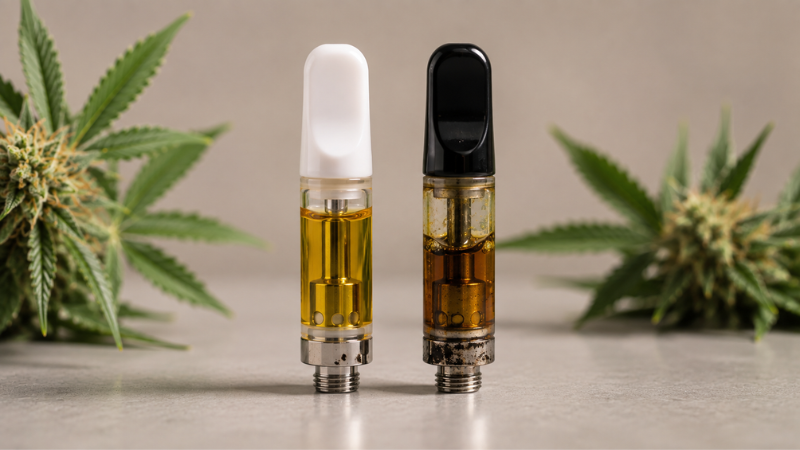
Counterfeit THC vape carts can be hard to recognize, as a fake product may closely copy the packaging, branding, and appearance of an authentic one. That means you usually can’t confirm THC cart originality just by looking at the oil or the cartridge itself.
The most sensible thing to do is to verify where the cart came from and examine information that can be independently checked, such as the product details, manufacturer, batch or lot number, and COA (Certificate of Analysis).
This matters a lot because unregulated or counterfeit THC vape carts may contain unknown additives, inaccurately labeled ingredients, cannabis extracts, or contaminants that haven’t gone through reliable testing. Health agencies have also cautioned against THC vaping products obtained from informal sources, especially in the context of the EVALI outbreak.
In this guide, we’ll explain how to tell if a THC cart is fake or genuine, the red flags to beware of, and how to verify a THC vape cart before buying or using it.
What Is a Fake THC Vape Cart?
A fake THC vape cart is typically a cartridge that is wrongly marketed as a legitimate, established, or regulated cannabis product.
It may imitate the packaging and name of a real brand, use generic packaging that looks like a legitimate product, or make claims about its THC content and ingredients that can’t be verified.
What Makes a THC Cart Counterfeit?
A counterfeit cart is designed to make the buyer believe it is something it isn’t. For instance, someone may fill an empty cartridge with unknown oil and place it inside packaging resembling a known cannabis brand.
Missing or unverifiable batch numbers, fake QR codes, inaccurate labels, and laboratory reports that don’t align with the actual product can all be red flags.
However, appearance alone can’t prove whether a cart is authentic; proper THC cart verification is more crucial than simply judging the box or oil.
Why Fake THC Carts Can Be a Safety Concern
The biggest concern isn’t just wasting money on a fake product. Unregulated or counterfeit carts may contain inaccurate THC concentrations, undisclosed ingredients, poorly manufactured hardware, or contaminants.
The 2019-2020 EVALI outbreak also highlighted the serious hazards associated with illegal THC vaping products, mainly products containing Vitamin E acetate. A counterfeit cart may therefore be unpredictable both in terms of what it has and how it will affect the user.
How to Tell if a THC Vape Cart Is Real or Fake
There is no one-size-fits-all way to guarantee a THC vape cart is real or not. A QR code, oil color, or professional-looking packaging alone can’t prove authenticity.
The most trustworthy approach is to check many pieces of information at once, including the product’s origins, whether the manufacturer recognizes it, and whether its testing information can really be confirmed.
Check Where the Cart Came From
Begin with the seller. Whether regulated cannabis sales are legit, buying from an authorized retailer or licensed dispensary usually offers more peace of mind than buying from an unknown online source or informal seller.
Examine the Packaging Carefully
Compare the packaging with information and images published through the manufacturer’s official channels. Look for poor quality, obvious spelling mistakes, broken seals, inconsistent logos, or details that don’t match the authentic product.
Look for Manufacturer and Product Information
A genuine product should provide transparent information about the product type, manufacturer, ingredients where applicable, THC content, and other necessary labeling. Vague or missing information should be treated as a warning.
Check the Batch or Lot Number
Look for a lot or batch number and see whether it can be linked to the specific product and its testing information. A number printed on the package is not sufficient if it can’t be verified independently.
Verify the Certificate of Analysis (COA)
If a COA is available, see that it comes from a real laboratory and matches the product’s lot or batch number. The report should be relevant to the specific product instead of a generic certificate reused across multiple products.
Be Cautious With Suspiciously Cheap Carts
An abnormally low price does not automatically prove a cart is fake, but it is a factor to investigate further. If a supposedly premium product costs much less than comparable products, don’t neglect the discrepancy.
Can You Tell if a THC Cart Is Fake by Looking at the Oil?
Looking at the oil inside a THC vape cart may reveal clear quality issues, but appearance alone can’t exactly tell you whether a cart is authentic or fake.
A legitimate cannabis extract can differ in consistency and color depending on its cannabinoid profile, formulation, extraction method, terpenes, and age.
Why Oil Color Isn’t a Reliable THC Vape Cart Authenticity Test
THC vape oil may range from golden to darker amber shades. A lighter or darker color doesn’t automatically mean the product is contaminated, fake, or risky. Color can change organically with time, and different extracts may look different from each other.
What About Oil Thickness and Bubbles?
Bubbles and oil thickness are also unreliable THC cart authenticity tests. Temperature can affect how fast the oil moves, while different formulations naturally have different viscosities.
A large bubble moving slowly may be normal in a thick extract, but it can’t prove that the cart is legal.
Can Taste or Effects Prove a Cart Is Real?
No. Strong effects, a smooth taste, or familiar flavor can’t confirm that a THC cart is original. Counterfeit products can imitate flavors and produce intoxicating effects, as they still may contain THC or other cannabinoids. Similarly, an unusual taste doesn’t by default prove that a product is fake.
The safest way is to treat the oil as only one visual clue and verify the manufacturer’s information, the seller, COA, and batch number instead.
Red Flags That May Indicate a Fake THC Cart
No single warning sign can tell you that a THC vape cart is fake. However, many inconsistencies together should give you a strong reason to pause and investigate before using the product.
The biggest red flags typically involve poor traceability, details that can’t be verified, or details that don’t align with the brand’s genuine products.
Poor-Quality or Inconsistent Packaging
Blurry printing, spelling mistakes, low-quality seals, inconsistent fonts, or packaging that looks noticeably different from the brand’s usual presentation can be warning signs.
Compare the product carefully with existing images from the manufacturer’s official channels.
Missing or Suspicious Product Information
Be careful if the packaging doesn’t have cannabinoid information, clear manufacturer details, ingredients, or other information usually required in the regulated market where it is sold.
Unverifiable Batch or Lot Numbers
A lot or batch number is handy if it can be linked to the actual product. Random-looking numbers that can’t be verified through the manufacturer or lab don’t provide much assurance.
Missing, Fake, or Unverifiable Lab Results
A COA isn’t automatically proof of authenticity. Check whether the lab is identifiable and whether the report matches the product’s specific lot or batch number.
Seller Cannot Provide Reliable Product Information
If the seller can’t explain clearly the origins of the cart or some reliable information about the brand and testing, that is a crucial warning sign.
Product Looks Different From the Manufacturer’s Official Packaging
Packaging designs can vary, so a difference doesn’t automatically mean a product is fake. Still, major inconsistencies should be checked directly against the manufacturer’s existing official product information.
How to Reduce the Risk of Buying a Fake THC Cart
While no method can ensure that all THC vape carts are authentic, taking some precautions can considerably reduce the risk of buying a fake or poorly regulated product.
The most crucial factor is traceability: you should be able to recognize who manufactured the product, where it was sold, and whether its information can be verified independently.
Buy From Licensed or Regulated Retailers Where Applicable
Where regulated cannabis markets exist, licensed dispensaries and authorized retailers normally provide more accountability than informal sellers. These businesses are usually subject to applicable product, testing, and labeling requirements.
Research the Brand Before Buying
Before buying, check the brand’s official website or other verified channels. Seek information about its packaging, products, authorized retailers, and customer support. If a brand has little or no verifiable presence, proceed carefully.
Verify Product Testing Information
Check whether the product has a COA (Certificate of Analysis) from an identifiable lab. Ideally, the report should correspond to the specific batch and product or lot number instead of being a generic document.
Avoid Products From Informal or Illicit Sources
Products obtained through unofficial sellers may be hard to trace and verify. You may have no trustworthy way to confirm their ingredients, manufacturing conditions, THC concentration, or authenticity.
Don’t Modify or Add Ingredients to a Vape Cart
Avoid diluting, refilling, or adding substances to a cartridge unless it is specially designed for that use. Modifying a vape can make its performance and contents more unpredictable and may create extra safety concerns.
Fake THC Cart vs. Legitimate Cart: What Should You Check?
When comparing a potentially fake THC cart with a genuine one, the most important difference is not how the cartridge looks.
Fake products can closely imitate original packaging, flavors, logos, and even QR codes. The better way is to compare information that can be verified independently.
Here are some important differences between real vs fake THC cart:
| What to Check | Legitimate Cart | Potential Red Flag |
| Source | Sold through a traceable, authorized, or licensed retailer where applicable | Sold by an unknown or informal seller |
| Manufacturer | Clear, verifiable brand and manufacturer information | Missing, vague, or difficult-to-verify details |
| Packaging | Matches the brand’s current official product information | Major inconsistencies, spelling errors, or poor-quality printing |
| Batch/Lot Number | Can be connected to the specific product or testing information | Number cannot be verified |
| COA/Lab Results | Comes from an identifiable lab and matches the relevant batch where possible | Missing, generic, suspicious, or unrelated report |
| Price | Reasonably consistent with the local market | Unusually cheap without a clear explanation |
| Product Information | Clear labeling about the product and its contents | Important information is missing or unclear |
Frequently Asked Questions About Fake THC Carts
How can you tell if a THC cart is fake?
Check a lot of details together, such as the packaging, seller, manufacturer information, lot or batch number, and lab results. Price or oil appearance alone can’t prove authenticity, so independently verifiable details are more reliable.
Can you tell if a THC cart is fake by the oil color?
No. THC oil can organically vary from lighter gold to darker amber depending on its age, formulation, and extract type. Extremely unusual or cloudy oil may raise doubts, but color alone can’t confirm originality.
Can a QR code prove that a THC cart is real?
No, a QR code can also be copied or linked to fake information. Check where the code leads, whether the website belongs to the lab or manufacturer, and whether the results align with the product’s batch.
Are fake THC carts dangerous?
Yes, they can be. Unregulated or counterfeit carts may contain inaccurate cannabinoid concentrations, undisclosed ingredients, contaminants, or poorly manufactured hardware.
As their contents may be hard to verify, using them can lead to more unpredictable safety risks.
Can you verify a THC cart’s batch number?
Yes, sometimes. Check whether the lot or batch number can be matched with the brand’s records or a relevant COA. A printed number on its own offers little to no assurance if the information can’t be verified independently.
What should you do if you bought a fake THC cart?
Don’t use the product if you think it is fake or its contents can’t be verified. Contact the manufacturer or retailer where appropriate, and also avoid giving the product to someone else.
Are all THC carts from unlicensed sellers fake?
No. It’s not possible to say that every cart from an unrecognized seller is counterfeit. However, products from informal sources are typically more difficult to trace, verify, and authenticate for testing or quality.
Final Thoughts
Telling whether a THC vape cart is fake or real isn’t as easy as checking the oil’s color, scanning a QR code, or seeing the packaging. Fake products can closely imitate original brands, making appearance alone an unpredictable originality test.
A safer approach is to see the complete picture. Check the origins of the product, compare the packaging with official information, research the manufacturer, and verify the lot ot batch number and COA whenever possible.
Be particularly careful with products from unknown sellers or carts offered at unbelievably low prices without a clear explanation.
In the end, the strongest sign of an authentic THC cart is traceability. If you can’t reliably verify the product’s manufacturer, its origins, or what it contains, it is better to consider it unsafe and fake.