
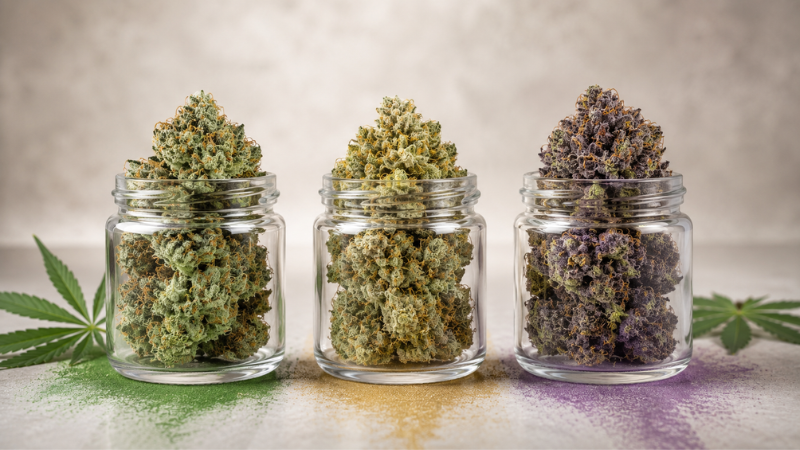
Go to any dispensary, and you will find cannabis products labeled as sativa, indica, or hybrid.
These categories are generally used to help customers buy products according to their desired effects, with sativa typically associated with energizing experiences, indica with relaxation, and hybrids providing a balance of both.
However, modern cannabis science tells us that the picture is way more complex than these labels alone.
Today, researchers believe that a cannabis product’s cannabinoid profile, dosage, terpene composition, and even a person’s biology may have a greater impact on the overall experience than whether it’s labeled as sativa, indica, or hybrid.
That’s why 2 people can use products from the same category and experience entirely different effects.
In this guide, we will explain the differences between sativa vs indica vs hybrid cannabis, how these classifications originated, what current data says, and what factors may matter most when choosing a cannabis product.
What’s the Difference Between Sativa, Indica, and Hybrid?
The terms sativa, indica, and hybrid are generally used to categorize cannabis based on its genetic background and traditional plant characteristics. Historically, these labels were also used to explain the types of effects users might experience.
Sativa strains have long been associated with energizing or cerebral effects, indica strains with relaxation, and hybrids with a mix of both.
However, modern cannabis research suggests that these labels alone cannot reliably predict how a particular product will impact a user.
Originally, Cannabis sativa and Cannabis indica referred to botanically different varieties that differed in their growth patterns, physical appearance, and native environments.
Over years of selective breeding, however, most cannabis products available today have become hybrids, bringing together genetics from both lineages. Consequently, the traditional differences have become increasingly blurred.
Researchers now believe that the chemical profile of a cannabis product, including its cannabinoids like CBD and THC and aromatic compounds known as terpenes, plays a more crucial role in shaping the whole experience than whether it is labeled as sativa, indica, or hybrid.
Individual factors such as body chemistry, tolerance, dosage, and consumption method can also determine how cannabis impacts a person.
While the hybrid vs indica vs sativa categories stay useful for explaining a product’s heritage and general characteristics, they should be seen as a starting point instead of a guarantee of specific effects.
What is Sativa?
Sativa is one of the 2 classic botanical classifications of cannabis and has traditionally been associated with plants that thrive in warm climates and have a leaner, taller appearance.
While the term is still widely used throughout the cannabis industry, it should not be seen as a trustworthy predictor of how a product will impact every consumer.
Today, a lot of cannabis products labeled as sativa are hybrids with varying chemical profiles, making the label more descriptive of a plant’s heritage than its exact effects.
Traditional Characteristics
Traditionally, sativa plants are taller than indica plants and can grow several feet in favorable circumstances. They usually have narrow, finger-like leaves, longer flowering periods, and a more open branch structure that allows better airflow.
Sativa varieties are believed to have originated in warmer regions near the equator, including parts of Central and South America, Southeast Asia, and Africa, where longer growing seasons support their extended development.
Commonly Associated Effects
Sativa strains are generally associated with uplifting and mentally stimulating effects. Many consumers report feeling more creative, focused, or motivated after using products marketed as sativa, making them a common choice for daytime use.
However, these effects are not guaranteed. Modern research explains that a cannabis product’s cannabinoid content, dosage, terpene profile, and an individual’s body chemistry are often more impactful than the sativa label itself.
Because of this, 2 products labeled as sativa, or even the same product used by 2 different people, can produce noticeably different experiences.
What is Indica?
Indica is one of the traditional classifications of cannabis and has long been linked with shorter, bushier plants that grow nicely in cooler climates.
Like sativa, the term is still used commonly by dispensaries, cultivators, and consumers to describe the genetic background of a product.
However, because decades of crossbreeding have produced countless hybrid varieties, an indica label alone can’t predict accurately how a cannabis product will affect every individual.
Traditional Characteristics
Indica plants are typically shorter and more compact than sativa plants, making them suitable for cultivation in regions with shorter growing seasons. They generally feature dark-green, broad leaves, dense branching, and a relatively faster flowering cycle.
Historically, indica varieties are believed to have originated in mountainous regions like the Hindu Kush, where the cooler climate influenced their compact growth pattern and hardy characteristics.
Commonly Associated Effects
Indica strains are historically associated with relaxing, calming, and body-focused effects. Several consumers report using indica-labeled products during the evening or before sleep, as they often describe a greater sense of physical relaxation.
However, these effects should be seen as basic associations rather than guarantees. Modern cannabis research signifies that the cannabinoid profile, dosage, terpene composition, consumption method, and individual body traits all play a much bigger role in determining the overall effects.
Consequently, 2 indica products, or the same product used by different people, may produce considerably different effects.
What is a Hybrid?
A hybrid is a type of cannabis made by crossing sativa and indica genetics to bring together features from both plant types.
Because cannabis has been selectively bred for years, most products available in the current legal cannabis market are hybrids instead of pure sativa or pure indica.
Breeders develop hybrids to accomplish specific traits, such as cannabinoid content, terpene profiles, plant growth characteristics, or other expected qualities.
Although hybrid products are usually marketed as providing a balance between sativa and indica, there is no universal set of effects that applies to every hybrid.
The experience depends on the product’s distinct chemical composition, including its terpenes and cannabinoids, as well as factors such as consumption method, dosage, and the individual’s body chemistry.
How Hybrid Strains Are Created
Hybrid cannabis strains are created by deliberately crossbreeding chosen sativa and indica plants over multiple generations.
Breeders select parent plants with specific characteristics they want to protect or enhance, such as flavor, aroma, potency, cannabinoid levels, yield, terpene profiles, or disease resistance.
Through selective breeding and stabilization, they create new varieties with stable genetic traits that align with particular cultivation or consumer preferences.
Types of Hybrid Strains
Hybrid strains are typically grouped into 3 wide categories: sativa-dominant, indica-dominant, and balanced hybrids.
Sativa-dominant hybrids generally inherit more characteristics from their sativa lineage, while indica-dominant hybrids lean toward traits related to indica plants. Balanced hybrids aim to mix genetics from both sides in a more even manner.
However, these labels explain a product’s genetic heritage rather than ensuring specific effects, which can still differ depending on its cannabinoid profile, terpene composition, and the individual consuming it.
Sativa vs. Indica vs. Hybrid: Key Differences
Although hybrid vs sativa vs indica are the 3 most common cannabis strain types, the differences between them go beyond just their names.
Traditionally, these labels were used to distinguish plants based on their physical traits, growing patterns, and the kind of experiences they were generally linked to.
Today, however, extensive crossbreeding has blurred several of these distinctions, making the labels more suitable for describing a product’s genetic makeup than guessing its exact effects.
Sativa plants are usually taller, have narrow leaves, and need a longer flowering period. They have traditionally been associated with energizing and mentally stimulating effects.
On the other hand, Indica plants are generally shorter, faster to flower, and bushier, with products often related to calming or body-focused experiences.
Hybrid cannabis combines genetics from both sativa and indica, letting breeders develop products with a wide variety of traits rather than fitting nicely into a single category.
Here’s a table summarizing the difference between sativa indica and hybrid along with sativa indica hybrid effects:
| Feature | Sativa | Indica | Hybrid |
| Plant structure | Tall and slender | Short and bushy | Varies by genetics |
| Leaf shape | Narrow leaves | Broad leaves | Mixed characteristics |
| Flowering time | Generally longer | Generally shorter | Depends on parent plants |
| Traditional effects | Commonly associated with uplifting or energizing experiences | Commonly associated with relaxing or body-focused experiences | Hybrid cannabis effects may combine characteristics of both |
| Genetic background | Primarily sativa lineage | Primarily indica lineage | Combination of sativa and indica genetics |
While this comparison offers a useful overview, it’s crucial to keep in mind that these characteristics are general guidelines rather than strict rules.
Modern research signifies that a cannabis product’s cannabinoid profile, terpene composition, dosage, and a user’s unique biology are often much more impactful than whether the product is labeled as sativa, indica, or hybrid.
Do Sativa, Indica, and Hybrid Really Produce Different Effects?
For several years, cannabis users thought that sativa, indica, and hybrid labels could reliably guess how a product would make them feel.
While these classic classifications are still popular, modern research indicates that the relationship between a cannabis label and its effects is far more complicated.
The same category can produce different effects depending on the product’s chemical composition and the individual using it.
What Modern Research Says
Existing research tells us that the cannabinoid profile (such as CBD and THC), dosage, terpene composition, and method of consumption typically have more influence on the overall effects than whether a product is labeled as sativa, indica, or hybrid.
Decades of crossbreeding have also made pure cannabis varieties increasingly uncommon, meaning many products on today’s market contain genetics from both conventional lineages.
As a result, cannabis experts now advise looking beyond the strain label and paying more attention to lab testing, cannabinoid content, and terpene profiles when selecting a product.
Why Two People Can Have Different Experiences
Even when 2 people consume the same cannabis product, they may not go through the same effects. Individual factors such as tolerance, body chemistry, metabolism, previous cannabis usage, dosage, and the medium of consumption can all impact the outcome.
A product that one individual finds calming may feel more stimulating to another. This variation is one of the primary reasons cannabis effects can’t be predicted only by whether a product is labeled as sativa, indica, or hybrid, making personal experience and careful product selection equally crucial.
What Matters More Than the Strain Label?
While the terms sativa, indica, and hybrid stay useful for explaining a cannabis product’s history, modern research indicates they should not be the main factors when predicting its effects.
Instead, experts strongly recommend checking a product’s chemical profile, especially its terpene and cannabinoid content.
These naturally occurring compounds interact with each other to impact how a cannabis product may react with body and mind.
Reviewing a product’s COA (certificate of analysis) or lab test results can usually provide more meaningful information than depending on the strain label alone.
Cannabinoids
Cannabinoids are the main active compounds found in cannabis. The 2 most popular are THC, the cannabinoid mainly responsible for intoxicating effects, and CBD, a non-intoxicating cannabinoid commonly included in several cannabis products.
Other naturally occurring cannabinoids, sometimes referred to as minor cannabinoids, may also contribute to the overall experience.
Rather than focusing on whether a product is labeled sativa or indica, understanding its cannabinoid profile, including CBD and THC concentrations, can provide better insight into its potential characteristics.
Terpenes
Terpenes are aromatic compounds naturally produced by cannabis and a lot of other plants. They are responsible for the unique aromas and flavors found in different cannabis varieties, ranging from pine and citrus to floral or earthy notes.
Researchers also believe terpenes may impact how cannabinoids work within the body, although this subject continues to be studied.
Common examples include limonene, myrcene, caryophyllene, and pinene. As terpene profiles can vary greatly even among products with the same strain label, they are considered a crucial factor when evaluating different cannabis products.
How to Choose Between Sativa, Indica, and Hybrid
Choosing between sativa, indica, and hybrid doesn’t have to be confusing. While these labels can give you a basic idea of a product’s background, they should not be the only factor guiding your decision.
A more sensible approach is to consider your preferences, review the product’s terpene and cannabinoid profile, and buy cannabis products from reputable sources.
As everyone’s response to cannabis can be different, finding the right product often involves starting with care and paying close attention to how your body reacts.
Consider Your Desired Experience
Before buying a cannabis product, think about the kind of experience you are looking for. Some people prefer products traditionally linked to energizing or mentally stimulating effects, while others want products typically associated with relaxation or balanced effects.
Keep in mind that these are general associations rather than guarantees, and results can vary in different individuals.
Look Beyond Sativa, Indica, and Hybrid Labels
Instead of relying only on the strain label, check the product’s cannabinoid content, terpene profile, and available lab testing. These details often give a clearer picture of a product’s features than just knowing whether it’s marketed as sativa, indica, or hybrid.
Start With Lower THC Products if You’re New to Cannabis
If you are just starting with cannabis, try doing it with products that contain lower THC quantities.
Starting with a tiny serving and increasing slowly lets you better understand how your body reacts while decreasing the likelihood of an undesirable experience. Following the brand’s recommended serving guidance is also a good approach.
Buy From Licensed and Reputable Retailers
Always buy cannabis products from licensed dispensaries or reputable retailers that prioritize transparency, quality, and third-party lab testing.
Trusted brands usually provide detailed product information, COAs, and accurate cannabinoid labeling, helping consumers make better buying decisions.
Frequently Asked Questions
Which is stronger: sativa, indica, or hybrid?
None of these categories is stronger than the clothes. A cannabis product depends mainly on its cannabinoid profile, particularly THC content, along with factors such as dosage, terpene composition, and individual tolerance, not whether it is labeled sativa, indica, or hybrid.
Is hybrid better than sativa or indica?
No. Hybrid isn’t better than indica or sativa automatically. Every category just represents different characteristics and genetics. The correct choice depends on your likes and dislikes, the product’s terpene and cannabinoid profile, and how your body reacts to cannabis.
Can a hybrid strain make you sleepy?
Yes. Some hybrid strains may be related to sleepy or relaxing effects, mainly indica-dominant hybrids. However, the overall experience depends more on the product’s terpene composition, cannabinoid profile, dosage, and your individual response than the hybrid label itself.
Why do sativa and indica affect people differently?
People can respond differently to the same cannabis product due to variations in tolerance, body chemistry, dosage, metabolism, and method of consumption.
Researchers also believe that terpenes and cannabinoids play a bigger role in shaping the experience than the strain label alone.
Should beginners choose sativa, indica, or hybrid?
Rather than concentrating on the strain category, newbies should consider products with lower THC concentrations, begin with a small serving, and only buy from reputable retailers.
Paying attention to cannabinoid content and product labeling is often more helpful than depending solely on indica, sativa, or hybrid classifications.
Final Thoughts
The difference between indica vs sativa vs hybrid isn’t as straightforward as many people think.
While these classic labels can offer a basic idea of a cannabis product’s genetic characteristics and background, they should not be treated as trustworthy predictors of its effects.
Modern research says that a product’s cannabinoid profile, dosage, terpene composition, and your individual biology are usually more significant than the strain label alone.
Because of that, it’s sensible to look beyond just marketing terms and review laboratory testing, ingredients, and cannabinoid content before buying anything.
Whether you choose sativa hybrid indica, buying from licensed, reputable brands/retailers and beginning with a product that aligns with your experience level can help you make more informed and responsible cannabis decisions.