
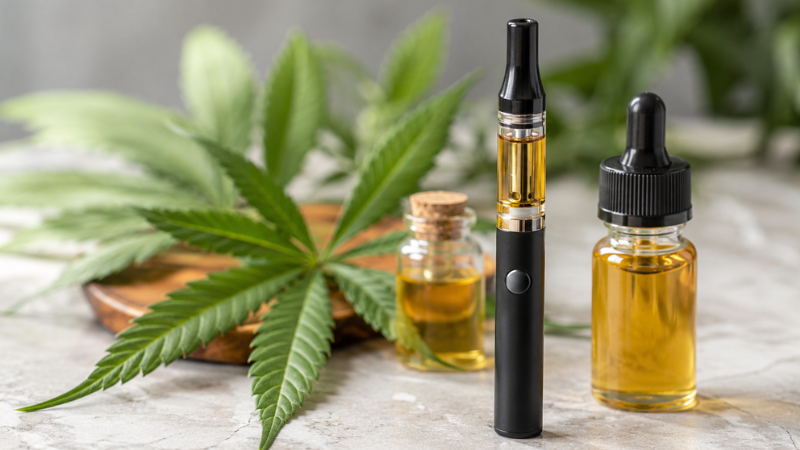
Can you vape CBD oil? The short answer is no. Regular CBD oil, also known as a CBD tincture, is meant for oral or sublingual use, not for inhalation.
Trying to vape a standard CBD oil can expose your lungs to ingredients that were never formulated to be heated or inhaled and may also damage your vape.
The confusion often arises from the fact that terms like CBD oil, CBD tincture, and CBD vape juice are sometimes used interchangeably, even though they are totally different from each other.
While CBD tinctures usually contain carrier oils such as MCT or hemp seed oil, CBD vape products are specifically designed for vaporization using ingredients intended for inhalation.
In this guide, we’ll take you through the differences between CBD oil and CBD vape juice, why standard CBD oil should never be vaped, the potential risks of using an inappropriate product, and how to identify CBD vape products that are only designed for safe use in compatible vaping devices.
Can You Vape CBD Oil?
No, regular CBD oil should never be vaped. Most CBD oils, also known as CBD tinctures, are formulated for oral or sublingual use and usually contain carrier oils such as MCT, hemp seed, or olive oil.
While these ingredients are generally safe for ingestion, they are not meant to be heated and inhaled through a vape device.
CBD products specially designed for vaping are made with formulations that are suitable for vaporization and compatible with vape hardware.
Premium or reputable CBD vape products are also tested by independent labs to evaluate their cannabinoid content and screen for any potentially harmful additives.
It’s also crucial to understand the terminology. CBD oil or CBD tincture refers to an ingestible product, whereas CBD vape juice or CBD vape oil is formulated only for inhalation.
Using an incompatible product in a vape device may not only damage the device but also expose you to undesirable byproducts and ingredients that were never intended to be inhaled.
What is CBD Oil?
CBD oil is a cannabidiol product that is mainly designed for oral or sublingual use instead of inhalation. CBD itself is a naturally occurring cannabinoid found in hemp and cannabis plants and, unlike THC, does not induce intoxicating effects.
Most commercially available CBD oils in the US are extracted from hemp and contain ≤0.3% THC by dry weight, in alignment with federal law.
To make CBD easier to take and absorb, manufacturers blend CBD extract with carrier oils that are safe for intake. These formulations are meant to be swallowed, placed under the tongue, or added to food or beverages.
Because they contain lipid-based carrier oils, they are not ideal for use in vape devices unless the product is specifically crafted for inhalation.
Common Ingredients in CBD Oil
CBD Extract
The primary active ingredient is extracted CBD from hemp or cannabis plants. Depending on the formulation, the extract may be full-spectrum, broad-spectrum, or an isolate.
Carrier Oils
CBD extracts are usually blended with carrier oils such as MCT, hemp seed, olive, or other food-grade oils. These ingredients enhance stability, make dosing easier, and support oral absorption.
How CBD Oil Is Intended to Be Used
Sublingual Use
The most popular way to use CBD oil is by placing a few drops under the tongue and waiting for 30-60 seconds before swallowing. This allows some of the CBD to be absorbed through the tissues in the mouth before the remaining is swallowed.
Added to Food or Drinks
Some CBD oils can also be blended with foods or beverages according to the manufacturer’s guidelines. Although this method is handy, absorption is generally slower than with sublingual use as the CBD passes through the digestive system.
Never Intended for Vaping
Unless a product is labeled clearly as a CBD vape product, it should never be used in a vape cartridge or pen. Standard CBD oils contain carrier oils that are formulated for ingestion, not inhalation, making them unfit for vaporization.
What is CBD Vape Juice or CBD Vape Oil?
CBD vape juice is a CBD product that is specifically formulated for use with compatible vaping devices.
Unlike standard CBD tinctures or oils, CBD vape products are designed to be heated into an inhalable aerosol rather than swallowed or applied under the tongue.
The biggest difference between standard CBD oil and CBD vape juice lies in their formulation.
Conventional CBD oils rely on carrier oils such as MCT, hemp seed, or olive oil to improve oral absorption, whereas CBD vape products are manufactured using ingredients meant for vaporization.
This allows the liquid to work properly with vape coils and helps prevent issues associated with using ingestible oils in vape devices.
High-quality CBD vape products are also crafted with inhalation in mind. Reputable manufacturers typically provide 3rd-party lab testing that verifies CBD content and screens for contaminants and unwanted substances.
Reviewing these COAs (Certificates of Analysis) can help consumers identify products that align with quality standards.
Types of CBD Vape Products
Disposable CBD Vapes
Pre-filled, single-use vapes that come ready for use straight out of the box. They require no refilling or charging and are designed to be thrown away once the CBD liquid or battery runs out.
CBD Vape Cartridges
Pre-filled cartridges that attach to compatible 510-thread vape batteries. They provide a convenient option for users who own a reusable vape battery already.
CBD Vape Pens
Rechargeable or replaceable devices specially designed for vaping CBD e-liquids or cartridges. Many are beginner-friendly, compact, and need minimal setup.
Refillable CBD Vape Juice
CBD vape juice is sold in bottles for use with vape tanks or refillable pod systems. These products let users refill their devices while offering more flexibility in choosing CBD flavors and strengths.
CBD Oil vs. CBD Vape Juice: What’s the Difference?
Although the names CBD oil and CBD vape juice are generally used interchangeably, both are very different from each other, with different formulations and uses.
Understanding these differences is important for safety and performance, as using the wrong product in a vape device can damage the device and expose you to ingredients that were not meant to be inhaled.
The biggest difference is the ingredients. Traditional CBD oil, also known as CBD tincture, is made with carrier oils such as MCT, hemp seed, or olive oil to support sublingual or oral use.
These oils are preferred as they improve stability and help the body absorb CBD when swallowed or placed under the tongue. However, their thick composition makes them unsuitable for vaporization.
CBD vape juice, on the other hand, is exclusively formulated for inhalation and compatibility with vape devices. Depending on the product, it may contain CBD isolate, broad-spectrum, or full-spectrum hemp extract, along with ingredients formulated for vapor production.
As these formulations are meant to be heated by a vape coil, they differ greatly from ingestible CBD oils in both composition and performance.
The user experience also varies. Vaping CBD usually produces faster absorption because the aerosol is inhaled through the lungs, while CBD oils taken orally or sublingually usually have a slower onset but may offer longer-lasting effects.
Why You Shouldn’t Vape Regular CBD Oil
Regular CBD oil, also known as CBD tincture, is meant for oral or sublingual use, not for vaporization. Although it may have the same cannabinoid found in other vape products, the supporting ingredients and overall structure are unique.
Using a CBD tincture in a vape can harm both your health and equipment, which is why makers distinguish ingestible CBD oils from products formulated specially for inhalation.
Carrier Oils Are Not Designed for Inhalation
Almost all CBD tinctures contain carrier oils such as MCT, hemp seed, or olive oil to enhance stability and support oral absorption.
While these oils are usually ideal for ingestion, they are not meant to be heated and inhaled.
When exposed to the high temperatures generated by a vape coil, lipid-based ingredients can break down into undesirable thermal byproducts and produce aerosols that are unfit for inhalation.
That is why CBD vape products are designed differently from regular CBD oils.
It Can Damage Your Vape Device
CBD tinctures are generally thicker than vape liquids and are not crafted to flow through vape coils or wicking materials.
Filling a vape cartridge with standard CBD oil may block the coil, decrease vapor production, cause leaking, or damage the device. Even if the device continues to work, it will hardly vaporize the oil efficiently.
Potential Health Concerns
Using products that are not meant for vaping may cause exposure to substances that haven’t been evaluated for inhalation.
During the 2019 EVALI outbreak, investigators linked several cases to illicit vaping products having Vitamin E acetate, highlighting the importance of using products exclusively formulated for inhalation.
Consumers should also stay away from products containing harmful waxes, fillers, or other additives that are unsuitable to be vaporized.
Because of this reason, it is best to go for CBD vape products from recognized manufacturers that provide 3rd-party lab testing and avoid using oral CBD oils or homemade mixtures in vape devices.
What Happens If You Vape CBD Oil?
Vaping a small amount of standard CBD oil by mistake doesn’t mean you will experience serious health effects immediately.
However, as CBD tinctures aren’t made for inhalation, they shouldn’t be used in a vape device. If you realize your vape with a regular CBD oil, discontinue using the device and replace it with a CBD product formulated for vaping specifically.
Possible Effects on Your Device
Regular CBD oils are usually thicker than vape liquids and contain carrier oils that are not formulated to pass through vape coils.
As a result, they make the coil clog, affect vapor production, cause leaking, produce a burnt flavor, or damage the pod or cartridge permanently.
Possible Health Risks
Heating carrier oils or other ingredients that are intended for oral use may generate undesirable thermal byproducts and expose the lungs to substances that haven’t been tested for inhalation.
During the 2019 EVALI outbreak, investigators linked several cases to illegal vaping products containing Vitamin E acetate, emphasizing the importance of using products that are formulated for vaping only.
Researchers also continue the study of long-term effects of inhaling various vaping ingredients, making product quality a crucial consideration.
What Should You Do If You Accidentally Vape CBD Oil?
If you vape standard CBD oil by accident, discontinue using the device, replace or empty the cartridge if possible, and clean the device according to the manufacturer’s guidelines before using it again.
If you suffer from non-stop coughing, chest pain, difficulty breathing, or other symptoms after vaping any product, seek medical attention immediately.
Moving ahead, always verify that a CBD product is labeled clearly for vaping and buy products only from reputable brands that provide 3rd-party lab testing.
How to Tell if a CBD Product Is Safe to Vape
Not all CBD products are engineered for inhalation, so it’s crucial to confirm that a product has been exclusively formulated for vaping before using it with a vape device.
A few easy checks, such as reviewing the vape, checking the ingredients, and verifying independent lab testing, can help you recognize high-quality CBD vape products and avoid oral CBD oils that are not intended for inhalation.
Check the Product Label
Begin by reading the product label carefully. A product meant for vaping should be clearly identified as CBD vape juice, CBD e-liquid, CBD vape oil, or another vape-specific formulation.
If the label describes the product as a CBD tincture, CBD oil, or oral supplement, it should never be used with a vape device. Manufacturers should also give clear usage guidelines and compatible device info whenever possible.
Read the Ingredient List
Always check the list of ingredients before buying a CBD vape product. Well-known manufacturers are clear about what their products contain.
Don’t use products that contain carrier oils formulated for oral use, such as MCT, hemp seed, or olive oil, as these are not designed for inhalation. Likewise, stay careful of products containing undesirable additives or fillers that are unfit for vaporization.
Look for Third-Party Lab Testing (COA)
One of the best indicators of product quality is the latest COA (Certificate of Analysis) from an independent lab.
This certificate verifies the product’s cannabinoid profile and may also include screening results for contaminants such as pesticides, heavy metals, residual solvents, and microbial impurities.
A lot of reputable brands also include a batch number or QR code on the pack that links directly to the lab report for that specific production batch, making it smoother to verify the product’s authenticity and testing results.
Buy From Reputable Brands
Only buy CBD vape products from trusted retailers and established manufacturers that prioritize quality control and product transparency.
Well-known brands usually provide detailed ingredient lists, lab reports, swift customer support, and transparent product labeling.
Preferring companies that openly share manufacturing practices and testing information can help you make a better buying decision and decrease the risk of purchasing products that are not suitable for vaping.
How to Vape CBD Safely
Using the right product and following general vaping best practices can help take your overall experience to the next level while minimizing the risk of undesirable issues.
Whether you are a newbie to CBD vaping or have used vape products earlier, selecting high-quality products, maintaining your device, and using appropriate settings are all crucial aspects of vaping CBD safely.
Choose the Right CBD Vape Product
Always use a CBD product that is especially formulated for vaping. Never use CBD tinctures, oral oils, or homemade mixtures in vape devices, as they are not meant for inhalation.
Before buying, make sure to verify the ingredient list, review 3rd-party lab testing (COA), and purchase products from reputable brands that label their CBD vape products clearly.
Start With a Low Dose
If you are a newbie in vaping CBD, start with a low-strength product or take 1 or 2 tiny puffs before waiting several minutes to observe how you feel.
As individual responses to CBD differ, increasing your serving slowly can help you determine the amount that works best for your preferences without abusing the product.
Use a Compatible Vape Device
Use a vape device that works with the CBD product you’ve chosen. Disposable CBD vapes, refillable pod systems, and vape cartridges are all crafted for specific formulations.
If your device provides adjustable power or temperature settings, follow the brand’s guidelines instead of using extremely high settings that may affect flavor and performance.
Keep Your Device Clean
Continuous maintenance helps your vape perform more reliably. Clean refillable tanks or pods according to the manufacturer’s instructions, replace coils when they are worn out, and check your device regularly for damaged components, leaks, or degraded battery performance. Using the right charger and avoiding damaged batteries also leads to safer operation.
Store CBD Vape Products Properly
Store CBD vape products in a cool, dry place away from direct heat and sunlight. Proper storage helps in preserving cannabinoid quality and reduces the chances of product degradation or leaks.
Always keep CBD vape products out of reach of pets and children, and follow any storage instructions given by the manufacturer.
Benefits of Vaping CBD
A lot of individuals choose to vape CBD because it provides a handy alternative to conventional CBD products such as capsules, oils, or edibles.
While experiences can vary, vaping is often preferred for its ease in using, portability, and relatively quicker onset as compared with orally consumed CBD products.
It’s crucial to keep in mind that CBD products are not meant to diagnose, cure, treat, or stop any disease, and research into their long-term effects is still in progress.
Faster Absorption
When a CBD vape product is taken in, the aerosol is absorbed through the lungs instead of passing through the digestive system first. Because of this, many users report noticing the effects faster than with CBD oils or edibles, which usually take longer to be absorbed.
Convenient and Portable
CBD cartridges, vape pens, and disposable devices are compact and handy, making them a portable option for people who like using CBD while traveling. Most devices need little to no setup and are ready to use within seconds.
Easy to Adjust Your Serving Size
Vaping lets users adjust their serving size gradually. Instead of consuming a fixed amount at one time, users can take 1 or 2 puffs, wait to gauge their effects, and decide whether more servings are needed. This flexibility makes it easier to find a serving that suits individual preferences.
Available in Different Flavors and Strengths
CBD vape products are available in a huge variety of cannabinoid strengths, flavor profiles, and formulations. Depending on the brand, consumers can select from full-spectrum, broad-spectrum, or CBD isolate products, as well as various flavor options to align with their personal preferences.
Potential Risks of Vaping CBD
Although several adults go with CBD vaping as an alternative to other consumption mediums, it is not totally risk-free. Like other inhaled items, vaping exposes the lungs to heated aerosols, and researchers continue to study the potential long-term health problems.
Buying high-quality products and using them as they were designed to be may help reduce avoidable risks, but no vaping product can be considered entirely risk-free.
General Risks Associated With Vaping
Vaping involves heating a liquid into an aerosol that is taken in through the lungs. The composition of that aerosol depends on the device, ingredients, and temperature.
Using products that are not meant for modifying devices, vaping, or improper operation may boost the risk of exposure to undesirable byproducts.
As research goes on, scientists are still evaluating the long-term effects of inhaling different vaping ingredients, including those found in CBD products.
Poor-Quality or Counterfeit Products
Product quality plays a critical role in vaping safety. Counterfeit or poorly manufactured CBD vape products may contain inappropriate CBD concentrations, shady ingredients, or contaminants such as pesticides, heavy metals, or residual solvents.
Some illegal vaping items have also contained additives such as Vitamin E acetate, which was linked with several cases during the 2019 EVALI outbreak. Buying from reputable brands that offer 3rd-party lab testing can help reduce these risks.
Unknown Long-Term Effects
Research on CBD and vaping innovation continues to grow, and the long-term effects of inhaling CBD vape products haven’t yet been fully established.
Because of this, consumers should use CBD vape products responsibly, follow manufacturer guidelines, avoid modifying products, and stay informed as the latest scientific evidence and regulatory guidance become available.
Frequently Asked Questions
Can You Put CBD Tincture in a Vape?
No, CBD tinctures are meant for oral or sublingual use only and usually contain carrier oils such as MCT or hemp seed oil. Only use CBD products that are specifically labeled and formulated for vaping.
Is CBD Vape Juice the Same as CBD Oil?
No, CBD vape juice is designed for inhalation, while regular CBD oil (tincture) is intended for sublingual or oral use. Although they both have CBD, their ingredients, formulation, and intended use are different.
Can You Vape Hemp Oil?
Only if the product is specifically formulated and labeled for vaping. Standard hemp seed oil or CBD oils meant for ingestion should never be used in a vaping device as they are not engineered for inhalation.
What Ingredients Should You Avoid in CBD Vape Products?
Stay away from products that contain ingredients not intended for inhalation, such as MCT oil or other carrier oils. It’s also a good idea to avoid products with undisclosed ingredients or without 3rd-party lab testing and transparent labeling.
Can Vaping CBD Make You Feel High?
CBD itself is a non-intoxicating cannabinoid and does not generally induce the “high” linked to THC. However, some CBD products may contain tiny amounts of THC, depending on their formulation and legal limits.
What’s the Safest Way to Use CBD?
The safest way to use CBD depends on the product’s intended use. Oral CBD oils should be consumed sublingually or orally, while only CBD products exclusively formulated for vaping should ever be inhaled. Always follow the manufacturer’s instructions.
Final Thoughts
The most important takeaway is simple: regular CBD oil and CBD vape juice aren’t the same product and should not be confused with each other.
CBD tinctures are designed for oral or sublingual use, whereas CBD vape products are specifically designed for inhalation with compatible vape devices. Using the wrong product can harm both your vaping device and safety.
If you prefer to vape CBD, always buy products that are labeled for vaping, check the ingredient list, and verify 3rd-party lab testing (COA) before use.
Buying from reputable brands that prioritize transparency and quality control can help you in making a better decision.
For those who prefer not to inhale oral oils, CBD, edibles, capsules, and topical products remain widely avaiallble alternatives.
Regardless of the method you choose, using CBD products only as they are meant to is best to promote both product’s performance and responsible use.