
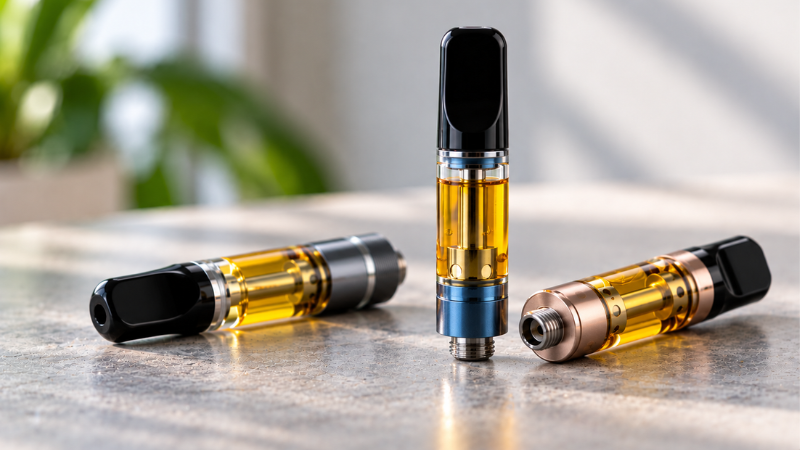
If you have come across the term “cart” while looking for vaping or cannabis products, you may wonder what it really means.
In the vaping dictionary, “cart” is just short for cartridge, a small container crafted to hold vape oil or another vaping formulation and deliver it through a suitable device.
Vape cartridges are typically used with batteries that provide power to a heating element, which converts the contents into an inhalable aerosol. Depending on the product, a cartridge may contain CBD, THC, nicotine, or other cannabinoid formulations.
There are also various kinds of vape cartridges, including 510-thread carts, proprietary cartridges, distillate carts, and products made with different cannabis extracts.
Understanding these differences can make it easier to choose appropriate hardware and evaluate what you are actually purchasing.
In this guide, we’ll explain what are carts, how a vape cartridge works, its main components, common types, and how carts compare with disposable vapes and vape pens.
What Are Carts?
“Cart” is short for cartridge, a term generally used for the prefilled component of a vaping system. A vape cart usually contains a concentrated oil or vaping formulation and connects to a compatible battery, which offers the power required to heat the oil.
In cannabis vaping, carts are generally filled with THC or CBD oil, although the specific formulation can differ from product to product.
The cartridge itself typically doesn’t contain the battery; instead, it works like a reservoir and heating assembly that converts the oil into an inhalable aerosol.
Vape cartridges are available in different sizes, designs, connection types, and oil formulations. Some use the commonly adopted 510-thread connection, while others are designed for proprietary devices.
Understanding what a cart is and what it contains is the first step towards understanding how cartridge vaping works.
What Is a Vape Cartridge?
A vape cartridge is a small, prefilled container that holds a vaping formulation and attaches to a compatible vape device or battery. Inside the cartridge, a heating element heats the liquid or oil, producing an aerosol that is drawn through the mouthpiece.
In cannabis products, the cartridge may contain THC oil, distillate, CBD oil, live resin, or another cannabis extract, depending on how it is made.
Nicotine cartridges employ e-liquid instead, showing why the term “cartridge” explains the hardware format, not necessarily what is inside it.
Most cartridges bring together the heating element, oil reservoir, airflow path, and mouthpiece into one compact unit.
This makes a cartridge vape simpler to use while also making compatibility, hardware quality, formulation, and product labeling crucial considerations when buying one.
How Do Vape Carts Work?
A vape cart works by using electricity to warm the coil or liquid inside the cartridge until it produces an inhalable aerosol. When the cartridge is connected to a compatible battery, the battery provides power to the cartridge’s heating element, also called an atomizer.
As the heating element heats up, the oil is drawn toward it and converted into aerosol. When you inhale through the mouthpiece, airflow carries that aerosol through the cartridge and into your mouth and lungs.
The process is relatively simple, but the experience can vary depending on the oil formulation, battery power, heating element, cartridge design, and airflow.
This is why 2 vape cartridges containing similar oil can still make considerably different flavor, production, and overall performance.
What Are the Main Parts of a Vape Cart?
Although a vape cartridge is a compact hardware piece, many components work together to store the oil, heat it, manage airflow, and provide the resulting aerosol.
Understanding these parts can also let you recognize compatibility problems or potential hardware issues.
Oil Chamber
The oil chamber is the reservoir that keeps the cartridge’s vaping formulation. In cannabis carts, this may contain CBD or THC oil, live resin, distillate, or another concentrate.
Design and chamber size can affect how much oil the cartridge holds and how consistently it feeds the heating element.
Heating Element or Atomizer
The heating element, often called the coil or atomizer, is the component responsible for heating the oil. When powered by the battery, it reaches the needed heat to make aerosol.
Wick
The wick helps transport oil from the reservoir toward the heating element. Conventional cartridge designs typically use porous materials that absorb and transfer the oil to the coil.
Some newer cartridge innovations employ ceramic heating systems or other designs that don’t depend on a traditional wick.
Mouthpiece
The mouthpiece is the part you inhale through when using the cartridge. It directs airflow from the heating chamber toward the user and is generally made from materials such as metal, plastic, or glass, depending on the cartridge design.
Threaded Connector
The threaded connector attaches the cartridge to its compatible battery. A lot of cannabis cartridges use the commonly adopted 510-thread connection, while proprietary cartridges use manufacturer-specific connections.
Threading alone, however, doesn’t ensure that all batteries and cartridges will work optimally together.
What Are the Different Types of Vape Carts?
Not all vape cartridges have the same substance or the same formulation. While “cart” explains the cartridge format, what is inside can differ significantly.
The most common types of vape cartridges include cannabis-derived CBD and THC carts, other cannabinoid formulations, and nicotine cartridges.
THC Vape Carts
THC vape carts contain cannabis oil formulated with THC (tetrahydrocannabinol), the cannabinoid mainly responsible for cannabis’s intoxicating effects.
They may use live resin, distillate, or other extracts, with differences in potency, flavor, terpene content, and overall cannabinoid profile.
CBD Vape Carts
CBD vape carts contain CBD (cannabidiol), a non-intoxicating cannabinoid found in hemp and cannabis.
They are typically formulated without dangerous levels of THC, although the exact CBD profile depends on the product. As with any vape product, the formulation should be specially designed for inhalation.
Other Cannabinoid Carts
Some cartridges contain cannabinoids other than traditional CBD or THC, including products marketed around compounds such as CBD or other hemp-derived cannabinoids.
These products can vary significantly in regulatory status and formulation, so studying the label and independent lab testing is especially crucial.
Nicotine Vape Cartridges
Nicotine vape cartridges contain nicotine e-liquid instead of cannabis oil. They are generally used with pod-based vaping systems and may contain nicotine salts or conventional nicotine formulations along with ingredients such as vegetable glycerin, propylene glycol, and flavorings. Their compatibility and hardware can vary from cannabis carts.
510-Thread Carts vs. Proprietary Carts
One of the primary differences between vape cartridges is how they attach to their battery. The two wide categories are 510-thread carts, which use a broadly adopted connection standard, and proprietary carts, which are crafted for specific manufacturers or devices.
What Are 510-Thread Carts?
510-thread carts have a standardized threaded connector that screws onto compatible 510 batteries. This makes them popular, as users can often pair cartridges from different manufacturers with compatible batteries.
However, voltage requirements, airflow, and other hardware specifications should still be kept in mind.
What Are Proprietary Carts?
Proprietary carts employ a manufacturer-specific device system or connection instead of the usual 510 thread. They may be designed to work only with a particular vape platform or battery.
While this can let manufacturers have more control over the device, it typically provides users less flexibility when switching between batteries and cartridges.
What Are Distillate Carts?
Distillate cartridges are vape cartridges filled with cannabis distillate, a highly refined cannabis extract that is processed to concentrate specific cannabinoids, most commonly THC.
Because distillation gets rid of most of the plant’s original compounds, the resulting oil is often relatively uniform and can have a high cannabinoid concentration.
Manufacturers may add terpenes back into distillate to provide aroma and flavor or to create a specific sensory profile.
This differs from extracts such as live resin, which are typically made with greater focus on preserving a wider range of the plant’s naturally occurring compounds.
One advantage of distillate is its versatility: it can be formulated into consistent cartridge products and flavored in various ways.
However, distillate explains the oil inside the cart, not the cartridge hardware itself; a distillate cart can still use different cartridge designs or types of connection.
What Is the Difference Between a Cart and a Vape Pen?
The terms cart and vape pen are generally used interchangeably, but they actually refer to different parts of a vaping setup. A cart, short for cartridge, is the part that holds the oil or vaping formulation.
A vape pen is the whole device that offers the power required to heat that cartridge. A typical 510-thread setup, for example, consists of a rechargeable battery and a separate cartridge.
The battery transfers electricity to the cartridge’s heating element, while the cart contains the oil and offers the mouthpiece and airflow path. Once the cartridge is empty, it can usually be replaced while the battery may continue to be used.
However, “vape pen” can also describe an all-in-one device, especially when the battery and cartridge are integrated into one unit. That’s why product terminology can often be confusing.
The simple distinction is: a cart is usually the replaceable cartridge, while a vape pen refers to the device used to vape it. So always check the manufacturer’s specifications to determine whether a cartridge is replaceable and what connection or battery it needs.
Cart vs. Disposable Vape: What’s the Difference?
A vape cart and a disposable vape can look the same and may offer a comparable vaping experience, but their hardware is crafted differently.
A cartridge is usually a replaceable component that holds the vaping formulation, while a disposable vape brings together the battery, cartridge, heating element, and other required components into one self-contained device.
With a conventional 510-thread setup, the cart attaches to a separate rechargeable battery. Once the oil runs out, the cartridge can be replaced without necessarily replacing the battery.
This makes cartridge systems more flexible, particularly for users who want to switch between different cartridges or formulations.
A disposable vape, by contrast, is generally designed to be used as a complete unit. The oil reservoir and battery are built into the same device, eliminating the need to buy a separate battery or worry about cartridge suitability.
Depending on the design, some disposables may be rechargeable, but the device is typically still intended to be thrown away once its hardware or usable contents are depleted.
The primary difference, therefore, is hardware design and replaceability. Carts provide a modular setup, while disposables prioritize simplicity and convenience.
No format is better than the other; the appropriate choice depends on factors such as convenience, compatibility, product availability, and how often you want to replace the hardware.
What Should You Know About Vape Cart Quality and Safety?
Not every vape cartridge is made to the same quality standards. Hardware materials, product formulation, manufacturing procedures, and supply chain transparency can all affect quality. Before using a cart, keep the following factors in mind.
Check the Product Label and Ingredients
Look for a clear ingredient list, batch or lot number, cannabinoid information, and manufacturer details. Stay away from products with vague labeling or ingredients that aren’t clearly identified.
Buy From Licensed or Regulated Sources
Where cannabis is legally regulated, buying from recognized/licensed retailers provides greater traceability and access to products subject to applicable labeling and testing requirements.
Avoid Damaged, Leaking, or Contaminated Carts
Don’t use a cartridge that is leaking, cracked, contaminated, or has damaged connections. Hardware problems can affect performance and may create additional safety concerns.
Understand What’s Inside the Cartridge
Know whether you are buying live resin, distillate, CBD oil, or another formulation. A product’s terpene and cannabinoid profile can impact its effects and characteristics.
Check for Proper Packaging and Labelling
Legitimate regulated products should have appropriate product information, packaging, and required warnings. Inconsistent or missing information is a reason to investigate further.
Don’t Rely on Appearance to Judge Cart Quality
Thickness, oil color, or other visual characteristics aren’t trustworthy proof that a cart is safe or genuine. Appearance alone cannot confirm what the formulation actually contains.
Be Aware of Potential Contaminants
Unregulated or poorly manufactured cartridges may contain undesirable substances, including pesticides, residual solvents, heavy metals, or other contaminants.
Third-party lab testing and a verifiable COA can offer more sensible information about product contents than appearance alone.
Frequently Asked Questions About Vape Carts
What does “cart” mean in vaping?
“Cart” is short for cartridge, the part of a vaping system that holds oil or another vaping formulation. It generally connects to a compatible battery, which powers the heating element and allows the contents to be inhaled as an aerosol.
What is a vape cart?
A vape cart is a small cartridge crafted to hold a vaping formulation and operate with a compatible battery. Cannabis vape carts may contain CBD, THC, live resin, distillate, or other extracts, depending on the product.
What is inside a cart?
A typical cart contains a reservoir filled with concentrate or vaping oil, along with an airflow pathway, heating element, and mouthpiece. Depending on its design, it may also use a wick or ceramic heating system.
Are all carts THC carts?
No. “Cart” refers to the cartridge format, not specifically to THC. Vape cartridges can contain CBD, THC, nicotine, or other cannabinoid formulations. The ingredients and product label should be checked to determine exactly what’s inside a cart.
What is a 510-thread cart?
A 510-thread cart is a cartridge with a standardized threaded connection that attaches to a compatible 510 battery. Although the connection is commonly used, manufacturer compatibility and battery specifications should be checked before pairing devices.
What is the difference between a cart and a vape pen?
A cart is usually a cartridge that holds the vaping formulation, while a vape pen is the powered device used to heat it. Some vape pens bring together the cartridge and battery into one integrated system.
Are THC carts and CBD carts the same?
No. CBD and THC carts contain different primary cannabinoids and can produce different results. THC is intoxicating, whereas CBD is usually non-intoxicating. Their formulations, potency, terpene profiles, and intended effects can also differ.
Are Carts the Same as Dab Pens?
No, a cart is generally a prefilled cartridge containing cannabis oil, while a dab pen is designed for concentrates such as shatter, wax, or rosin. Their chambers, loading methods, and heating systems can therefore differ.
Final Takeaway
If you have been confused about what are carts, the simplest answer is that a cart is short for cartridge, a compact component crafted to hold a vaping formulation and work with a compatible device or battery.
While cannabis carts typically contain CBD, THC, distillate, or other cartridges, extracts can also be designed for nicotine and other formulations.
The crucial thing is that a cart is more than just a small container of oil. Its heating element, ceramic or wick system, airflow, mouthpiece, and connector all lead to how the cartridge operates.
Understanding these components also makes it easier to distinguish 510-thread carts from proprietary systems, and cartridges from complete disposable vapes or vape pens.
In the end, selecting a vape cartridge should involve more than price or appearance. Pay attention to compatibility, formulation, manufacturing information, labeling, and available lab testing.
When you understand what the cart contains and how its hardware functions, you can make a better decision about the product you are thinking about buying.