
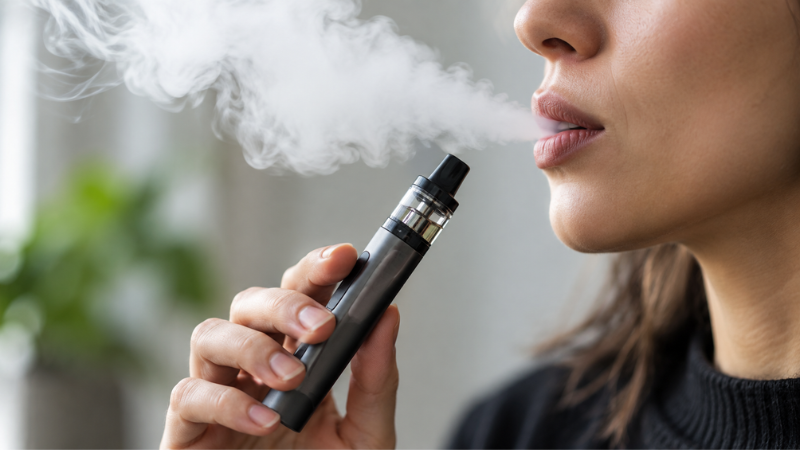
Vaping is the process of using an e-device to heat a liquid or other material and produce an aerosol that is inhaled. Unlike conventional smoking, vaping doesn’t rely on burning cannabis or tobacco to create smoke.
The term vaping can refer to the use of many different vaping devices, including vape pens, e-cigarettes, pod systems, and other e-vaporizers. Depending on the product, the material being heated may contain cannabis compounds, nicotine, flavorings, or other ingredients.
Understanding the vaping meaning begins with knowing what occurs inside the device. A battery sends power to a heating element, which heats the vape liquid or concentrate and produces an aerosol that travels through the mouthpiece.
Although vaping is often described as an alternative to smoking, it is not just “water vapor,” and it isn’t completely risk-free. The contents of the aerosol and the potential health risks can differ depending on the device, ingredients, and how the product is operated.
In this guide, we’ll explain what vaping is, how vape devices work, what they contain, how vaping differs from smoking, and what is known about its safety currently.
What Is Vaping?
Vaping is the process of inhaling an aerosol produced when an electronic device heats a concentrate, liquid, or other material. Unlike smoking, vaping doesn’t depend on burning cannabis or tobacco to produce smoke.
Instead, a heating element heats the material and produces an aerosol that can be inhaled through the mouthpiece.
Put simply, vaping means using an e-device to warm a substance and inhale what it produces. Depending on the product, the substance may contain nicotine, flavorings, cannabis compounds, or other ingredients.
Common vaping devices include vape pens, e-cigarettes, disposable vapes, pod systems, and tank-based vaporizers. Although their designs vary, most use the same basic principle: a power source activates a heating element, which transforms the contents into an inhalable aerosol.
Importantly, vape aerosol is not just water vapor. Its composition depends on the ingredients being heated, the device, and operating conditions. This is why understanding what a particular vape contains is a crucial part of understanding vaping itself.
What Is a Vape?
A vape is an e-device made to heat an oil, liquid, concentrate, or other material and create an aerosol for inhalation. Unlike cigarettes, which burn tobacco, a vape typically employs a battery-powered heating element instead of combustion.
Vapes come in several forms, including rechargeable vape pens, disposable e-cigarettes, pod systems, and larger tank-style devices. Their design, size, power source, and refill method can vary, but the basic purpose remains the same: heat a substance and deliver the resulting aerosol through a mouthpiece.
The term “vape” can also refer to the device itself or to the activity of using one. What a vape contains depends on the particular product. Some are designed to deliver nicotine, while others are made for cannabis concentrates, oils, or nicotine-free liquids.
As different devices use different heating systems and formulations, not every vape works in the same way. So understanding the device’s components and intended use is crucial before discussing how vaping actually works.
How Does Vaping Work?
Vaping works by using a power source to heat an oil, liquid, or concentrate and produce an aerosol that can be inhaled.
Unlike smoking, which burns cannabis or tobacco and creates smoke, vaping devices usually use controlled heat without combusting the material directly.
Most modern vaping devices have a battery, a tank, a heating element, cartridge or pod that holds the material being heated. When the device is turned on, the battery sends current to the heating element.
The resulting heat is transferred to the concentrate or liquid, creating an aerosol that travels through the device and out through the mouthpiece.
The process can vary slightly between devices. Button-activated models need the user to press a button, while draw-activated devices detect inhalation and activate the heating element automatically. Some devices also let users adjust temperature or power settings.
The process looks like this:
Power source → heating element → material is heated → aerosol forms → aerosol is inhaled.
The aerosol produced isn’t just water vapor. It can contain ingredients from the authentic product as well as substances emitted during heating.
So, what someone inhales depends on factors such as the device design, formulation, temperature, and how the vape is used.
What Are the Main Parts of a Vape?
Although vaping devices can look quite different, most are built around a few basic components that work together to warm the vape material and deliver the resulting aerosol.
Disposable vapes may bring together many of these parts into one sealed unit, while larger devices often make every component replaceable or more visible.
Battery or Power Source
The battery offers the electrical current required to use the device. Rechargeable vapes generally use lithium-ion batteries, while disposable devices contain a built-in battery crafted for the product’s intended life.
Coil or Heating Element
The coil, or heating element, converts energy into heat. When turned on, it heats the oil, liquid, or concentrate inside the device and produces the aerosol that can be inhaled.
Tank, Pod, or Cartridge
This component holds the material being heated. A tank is often refillable, while cartridges and pods may be prefilled or refillable on the device. Cannabis vape pens generally use cartridges containing cannabis concentrate or oil.
Wick
In a lot of traditional e-cigarette designs, the wick absorbs e-liquid and delivers it toward the heating coil. Common wicking materials include cotton and other absorbent materials. Some latest systems employ heating designs that don’t depend on a conventional wick.
Mouthpiece
Together, these components let a vape transform its contents into an inhalable aerosol without the burning involved in traditional smoking.
The mouthpiece is the part through which the user inhales the aerosol. It connects the airflow path to the user’s mouth and is generally placed at the top of the pod, tank, or cartridge.
What Is Vape Juice or E-Liquid?
Vape juice, also known as e-liquid, is the liquid used in a lot of electronic cigarettes and vaping devices. When the device is turned on, the e-liquid is delivered to the heating element, where it is heated to create an aerosol that the user takes in.
Almost all conventional e-liquids contain a combination of PG (propylene glycol) and VG (vegetable glycerin), which makes up the liquid’s base.
PG is usually linked with a stronger throat sensation and helps carry flavor, while VG is thicker and typically produces denser aerosol. Formulations can also contain flavorings and, depending on the product, nicotine.
The amount and kind of nicotine can differ significantly. Some e-liquids contain freebase nicotine, while some use nicotine salts, which are crafted differently and are commonly found in pod-style vapes.
It’s crucial to distinguish traditional vape juice from cannabis vape oils. A nicotine e-liquid is formulated exclusively for compatible nicotine vaping devices, while a cannabis vape cartridge typically contains a cannabis extract and employs different hardware and formulations.
Not every e-liquid works with every device, so users should follow the brand’s specifications instead of assuming different liquids can be used interchangeably.
Vaping vs. Smoking: What’s the Difference?
The main difference between vaping and smoking is how the substance is heated. Smoking relies on combustion, meaning cannabis or tobacco is burned at high temperatures to produce smoke.
Vaping instead uses an e-device to heat an oil, liquid, or concentrate and produce an aerosol for inhalation.
As vaping doesn’t involve the same combustion process, its aerosol generally contains fewer of the combustion byproducts found in conventional cigarette smoke. However, this doesn’t mean vaping is 100% safe or simply a safer version of smoking.
Vape aerosol can still contain nicotine, ultrafine particles, flavoring chemicals, and other substances depending on the product and how it is heated.
Smoking also produces carbon monoxide and tar as a result of combustion, while vaping devices don’t produce these substances in the same manner.
At the same time, vaping introduces its own considerations, including exposure to heated aerosols and the potential for high concentrations of nicotine or cannabis compounds.
One more important difference is the variety of products available. Smoking usually involves burning a combustible material, whereas vaping can include cannabis oils, e-liquids, concentrates, or other formulations.
So, while vaping and smoking are both inhalation methods, they are not the same process. The absence of combustion changes what is produced and inhaled, but it doesn’t eliminate the potential health problems associated with vaping.
Is Vaping Safe?
Whether vaping is safe depends on what product is being used, how often it is used, and what it is being compared with.
The crucial point is that vaping is not completely risk-free. Vape aerosol can contain nicotine, ultrafine particles, flavoring chemicals, and other substances that may be inhaled into the lungs.
For people who don’t already use tobacco or nicotine, starting to vape can introduce needless exposure to nicotine and may lead to addiction. Nicotine is particularly concerning for young people as the brain continues developing through adolescence.
Vaping also carries device-related issues. Batteries can malfunction or overheat when improperly handled or damaged, while using unsuitable liquids or modifying a device can cause extra hazards.
We strongly advise to use properly formulated e-liquids rather than unrelated substances. At the same time, “vaping is not risk-free” doesn’t mean vaping and smoking are the same.
Smoking involves combustion, which produces smoke and numerous combustion-related chemicals.
For adult smokers who totally switch away from combustible tobacco, vaping may expose them to fewer harmful substances than continuing to smoke, but that doesn’t make vaping harmless.
The safest alternative for someone who doesn’t smoke or use nicotine is generally not to start vaping altogether.
For existing smokers considering vaping as an alternative, the health implications are more nuanced and should be considered alongside other evidence-based methods to quitting.
Frequently Asked Questions About Vaping
What does vaping mean?
Vaping means inhaling an aerosol produced when an electronic device heats an oil, liquid, or concentrate. Common vaping devices include e-cigarettes, pod systems, vape pens, and other e-vaporizers.
Is vaping the same as smoking?
No, smoking involves burning substances and producing smoke through combustion, while vaping typically heats a concentrate or liquid to create an aerosol. However, being different from smoking doesn’t mean vaping is 100% risk-free.
What is inside a vape?
What is inside a vape depends on the product. E-cigarettes commonly contain e-liquid with ingredients such as VG, PG, flavorings, and sometimes nicotine. Cannabis vapes may instead contain concentrate or cannabis oil.
Does vaping contain nicotine?
A lot of vapes contain nicotine, although not all of them. Nicotine may be present in different concentrations and formulations, while some products are nicotine-free or designed to deliver cannabis compounds instead.
Does vaping produce smoke?
No, vapes usually produce an aerosol, not smoke, as they heat their contents rather than burning them. The aerosol can contain small droplets and other substances from the concentrate, liquid, device, and heating process.
What is vape juice?
Vape juice, also called e-liquid, is the liquid used in several e-cigarettes and vaping devices. It commonly contains a base of PG and VG, along with flavorings and, depending on the product, nicotine.
How does a vape produce aerosol?
A vape uses electrical power to activate a heating element, which heats the liquid or concentrate inside the device. This process produces an aerosol containing tiny suspended droplets or particles that can then be inhaled.
Are all vapes the same?
No, vapes differ considerably in their size, design, heating system, power source, and intended contents. Pod systems, disposable devices, vape pens, and tank-based models can operate differently and may require different cartridges or liquids.
Is vaping safe?
Vaping is not completely risk-free or safe. Potential concerns include exposure to particles and chemicals in aerosol, device-related hazards, and nicotine dependence. The risks also differ according to the ingredients, product, individual circumstances, and frequency of use.
Final Takeaway
Understanding what vaping is starts with a simple thing: a vaping device uses a power source to heat an oil, liquid, or concentrate and produce an aerosol for inhalation.
Unlike smoking, the process doesn’t depend on burning the material, although that doesn’t make vaping 100% safe.
Modern vaping devices come in several forms, including pod systems, disposable vapes, vape pens, and tank-based devices.
Their contents and designs can vary significantly, but almost all rely on the same basic combination of a heating element, power source, and material that is heated.
Vape products may contain cannabis compounds, nicotine, flavorings, or other ingredients, so the potential risks and effects depend a lot on what is being used. The aerosol produced by these devices is also more than simply harmless water vapor.
For anyone considering vaping, understanding its contents, the device, and the potential risks is crucial.
People who don’t already use cannabis or nicotine generally have little to no reason to start vaping, while those who do use these products should stay informed about responsible use and avoid assuming that vaping is completely safe.